Can a Monk Be a Jew?
by Rabbi Mordechai Becher
January 4, 2026
Brother Daniel wore a monk’s robes and prayed in a church. He also insisted he was Jewish. Israel’s Supreme Court and Jewish law gave two very different answers.
A Jew from Poland named Oswald Rufeisen converted to Christianity and became a Carmelite monk, taking the name Brother Daniel. Despite his conversion, he continued to identify as a Jew and in 1958 applied for citizenship in the State of Israel on the basis of his Jewish birth. One of Israel’s central doctrines is the Law of Return, guaranteeing the right of every Jew to immigrate to Israel and to become a citizen.
The Israeli Ministry of the Interior, uncertain how to proceed, referred the matter to the Israeli Supreme Court. The Court faced a profound dilemma. If it were to rule that Brother Daniel was no longer Jewish because he had abandoned Judaism, it would effectively declare that Jewish identity depends upon observance of Jewish law and belief. Yet most members of the Court—and a substantial portion of Israeli society—were secular and did not themselves observe Jewish law. On what grounds, then, could they deny Brother Daniel’s Jewishness?
Brother Daniel embraced Christianity and lived as a Carmelite monk. Should he be regarded as a Jew?
On the other hand, Brother Daniel had fully embraced Christianity, adopted a new religious identity, and lived as a Carmelite monk. It was difficult to see how someone so thoroughly identified with another faith could still be regarded as a Jew in the civic sense.
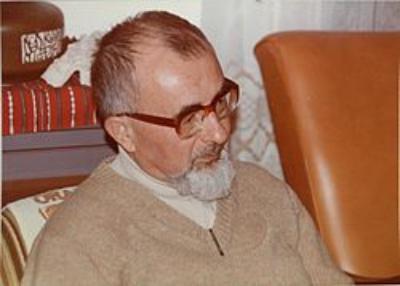 Oswald Rufeisen, Brother Daniel
Ultimately, the Court ruled that Brother Daniel could not be recognized as Jewish for the purposes of Israeli citizenship and the Law of Return. Crucially, the justices emphasized that they were not judging him according to Jewish law. Indeed, they explicitly acknowledged that according to Halakhah, Jewish law, Brother Daniel was entirely Jewish: born to a Jewish mother, he remained Jewish despite his apostasy. Their decision rested instead on secular Israeli law, under which the term “Jew” could not apply to someone who fully identified as a Christian.
This incident raises a fundamental and fascinating question: Are Jews a nation, a family, or a religious community?
Religion and Nation
Christianity offers a useful contrast. A person born to Christian parents who rejects Christian belief, ceases participation in church life, and denies Jesus is no longer considered Christian. Christianity is clearly a religion—not a family or a nation—and religious identity depends on belief and practice.
A nation, however, functions differently. A person born in Japan to Japanese parents remains Japanese even if he lives in the United States, speaks English, eats Western food, and has no interest in sumo wrestling. Conversely, a Hawaiian sumo wrestler who speaks fluent Japanese, lives in Japan, and fully adopts Japanese culture is still considered a foreigner—a gaijin. National identity, in this sense, is not determined by belief or behavior but by origin.
Judaism seems to resemble this latter model. The Talmud (Sanhedrin 44a), commenting on a verse in the Book of Joshua, states: “An Israelite, even though he has sinned, remains an Israelite.” No matter how far a Jew strays from Jewish practice or belief, his or her Jewish identity remains intact.
While being a child entails obligations, failure to meet those obligations does not nullify the relationship itself.
The Talmud further describes the Jewish people as “children of God.” In Kiddushin (36a), it teaches that even a wayward, rebellious, or foolish child remains the child of his father. Sonship is intrinsic, not behavior-dependent. While being a child entails obligations, failure to meet those obligations does not nullify the relationship itself. As the Maharal of Prague, the great 16-century thinker, explains, inherent identity is not lost through misconduct (Netzach Yisrael, Ch. 11).
At the same time, Judaism allows for conversion. A sincere convert becomes fully Jewish—no less so than one born Jewish. A famous exchange illustrates this point. A convert named Ovadiah asked Maimonides whether he could recite the traditional prayers that speak of “our fathers Abraham, Isaac, and Jacob” and of “the land You gave to our ancestors.” He felt uncomfortable claiming ancestral ties that were not biologically his.
Maimonides (Responsa #293) responded that God’s covenant was made not only with Abraham’s biological descendants, but also with his ideological descendants. All the blessings, promises, and covenants granted to the children of Abraham, Isaac, and Jacob apply equally to a sincere convert. Conversion, then, is not merely the adoption of religious beliefs or practices; it is entry into the Jewish people as a full member of the nation.
Conversion is not merely the adoption of religious beliefs or practices; it is entry into the Jewish people as a full member of the nation.
This resembles citizenship in certain modern states, such as the United States. A foreigner who fulfills the requirements of naturalization and pledges allegiance becomes a full citizen. In this respect, Judaism appears less like a religion and more like a nation.
Like a Family
Yet Judaism also functions like a family. Jewish identity is determined by birth to a Jewish mother (Kiddushin 68b). Although tribal affiliation, priestly status, and royal lineage follow the father, one’s fundamental identity as a Jew is determined exclusively by matrilineal descent. This suggests that Jewishness is not merely national or religious, but familial.
The result is a productive tension. Judaism possesses all the elements of a religion: beliefs, commandments, sacred texts, rituals, and prayers. Yet Jews are defined by birth into a family, regardless of belief or practice. At the same time, Jews maintain a deep attachment to a land, a language, and a shared destiny, and allow the possibility of voluntarily joining as a citizen — all hallmarks of a nation.
A Nation with a Sacred Mission
Perhaps the Torah itself provides the answer when it describes the Jewish people as “a kingdom of priests and a holy nation.” (Exodus 19:6) Judaism is a nation—but a nation with a sacred mission. Like priests, Jews are charged with religious responsibilities. Jewish tradition holds that God formed the Jewish people to carry enduring messages through history: ethical monotheism, justice, compassion, philanthropy, and the sanctity of human life. (Genesis 18:19)
To fulfill this mission, God created not merely a religion, but a people—a nation and a family bound together by a native, inherited faith passed from generation to generation, across time and geography. The Jewish people are like a multistage rocket: launched with a fixed destination, each generation providing the propulsion for the next. As one stage completes its task, the next ignites, guided by an internal navigation system set at the very beginning. Each generation advances the collective journey through history.
To enable this, God endowed every Jew with a spark of Jewish identity and an inner moral compass that resists complacency and seeks meaning, purpose and spiritual elevation. This inner guidance impels Jews to strive not merely for what is, but for what ought to be. Judaism is a part of the Jewish family DNA, and every Jew is a member of the Jewish nation. (Maimonides, Mishneh Torah, Laws of Divorce 2:20, Nefesh HaChaim, First Essay, Notes, Ch. 18)
Rabbi Dr. Meir Soloveichik, in explaining matrilineal descent (The Jewish Mother: A Theology) captures this synthesis beautifully:
“Judaism is a faith founded primarily on familial identity… Yet precisely because Judaism involves the election of a natural family, it is Jewish women rather than men who serve as the foundation of our familial faith. If, despite disinterest and disregard for one’s heritage, a Jew cannot sever his or her bond to nation, family, and covenant, it is because the Almighty guarantees—paraphrasing Isaiah—that a mother cannot forget her child, nor withhold compassion from the child she bore. And so God will not forget Israel either. Anyone born to a Jewish mother is bound, by her love and by God’s love, to the Jewish family and to every other Jew. Born into a Judaism that is not merely a faith but a family, we are joined for eternity—to God and to one another.”
Judaism, then, is not reducible to a single category. It is simultaneously a religion, a nation, and a family—bound together by covenant, history, and an unbreakable bond of identity. The Jews are purpose-driven agents of positive change, commanded with a mission that they cannot ever abandon.
Judaism isn’t reducible to a single category. It is simultaneously a religion, a nation, and a family—bound together by covenant, history, and an unbreakable bond of identity.
Jews are a family—bound physically, genetically, and emotionally. Jews are a religion, defined by shared beliefs, responsibilities, and aspirations. Jews are a nation, rooted in a land, united by a language, and guided by a common destiny.
Am Yisrael Chai
Over the past two years, a phrase has become especially resonant in Israel: “Am Yisrael Chai”—“the nation of Israel lives.” In these three words, our many strands of identity converge. Am signifies a people, a nation. Yisrael is the name of our family. Chai—“lives”—declares that we are not an ancient relic or a faith frozen in time. We live and breathe; we are vibrant, enduring, and relevant, as we have been for over 3,000 years—and as we will be forever.
Rabbi Mordechai Becher
Rabbi Mordechai Becher, originally from Australia, is an instructor at Yeshiva University and alumni Rabbi of Neve Yerushalayim College. He received his ordination from the Chief Rabbinate of Israel and the Chief Rabbi of Jerusalem and holds an MA in Medieval Jewish History from the Bernard Revel Graduate School where he is a doctoral candidate. He taught at Ohr Somayach and Neve Yerushalayim in Jerusalem and served in the Israel Defense Forces. Rabbi Becher has answered thousands of questions on AsktheRabbi.org, presents a Talmud class, Dimensions of the Daf, for the Jewish Broadcasting Service and was senior lecturer for Gateways for 20 years. Rabbi Becher’s latest book, Gateway to Judaism, published by Artscroll, is in its tenth printing. He has taught in the USA, Canada, England, Israel, South Africa, Australia and Russia, and is a scholar in residence for Legacy Kosher Tours. He has led tours in Africa, Australia, Czech Republic, China, England, Hungary, India, Italy, Israel, Japan, Morocco, Panama, Russia, South Korea, Thailand, and Vietnam.More from this Author >


No comments:
Post a Comment