10 books to help you understand Israel and Palestine, recommended by experts
Published: November 22, 2023 6.06am AEDT
Authors
VC Fellow, La Trobe University
Kronhill Senior Lecturer in East European Jewish History, Monash University
Professor of Anthropology and Social Theory, The University of Melbourne
Research Scholar, Centre for Arab and Islamic Studies, Australian National University
Associate Professor in Modern European History and Jewish History, UNSW Sydney
Senior Lecturer, Macquarie School of Social Sciences, Macquarie University
Lecturer, History of Ideas, Trinity College, The University of Melbourne
Senior Lecturer in English and Literary Studies, The University of Western Australia
Affiliate Researcher, The Australian Centre for Jewish Civilisation, Monash University
Disclosure statement
Dennis Altman received a small ARC grant forty years ago to research the Israel/Palestine debate within the National Union of Australian University Students
Jan Lanicek receives funding from ARC. He is a co-president of the Australian Association for Jewish Studies.
Jumana Bayeh has received funding from the ARC. She is a board member of Arab Theatre Studio.
Ran Porat is a Research Associate for the Australia/Israel & Jewish Affairs Council (AIJAC) and receives funding from this organisation.
Daniel Heller, Ghassan Hage, Ian Parmeter, Micaela Sahhar, and Ned Curthoys do not work for, consult, own shares in or receive funding from any company or organisation that would benefit from this article, and have disclosed no relevant affiliations beyond their academic appointment.
Partners

Monash University, University of Melbourne, and University of Western Australia provide funding as founding partners of The Conversation AU.
La Trobe University, Macquarie University, UNSW Sydney, and Australian National University provide funding as members of The Conversation AU.
View all partners
DOI
https://doi.org/10.64628/AA.ydcy9gjff

We believe in the free flow of information
Republish our articles for free, online or in print, under Creative Commons licence.Republish this article
Share article
Print article
Apeirogon/The Age of Coexistence
Recommended by Ghassan Hage, Professor of Anthropology and Social Theory, University of Melbourne
I recommend two much-needed books in the present time. Despite the Gaza massacres seemingly planting the seeds of endless future hatred, the future of Palestine/Israel can only be a future of togetherness.
I recommend two much-needed books in the present time. Despite the Gaza massacres seemingly planting the seeds of endless future hatred, the future of Palestine/Israel can only be a future of togetherness.

These two very different books provide elements for thinking about such togetherness. The first is Apeirogon by Colum McCann. It is about a Palestinian and an Israeli whose daughters have been killed by the enemy other, who struggle to find a way towards peace. One can easily trivialise such an endeavour if one forgets the colonial history and the power relations that locate each father differently within Palestine/Israel. This book doesn’t.
The second book is The Age of Coexistence by Ussama Makdisi. This book reminds us that before the modern advent of the ethnonationalist fantasy, Palestine was the home of an indigenous form of religious coexistence, which Makdisi calls the “ecumenical frame”. This offers us an important, realistic resource for thinking about future togetherness.
Rethinking the Holocaust
Recommended by Jan Lanicek, associate professor in Modern European History and Jewish History, UNSW
One of the most intriguing historical questions about the origins of the conflict – oft-debated and oft-misunderstood, is the relation between the Holocaust and the creation of the State of Israel.
One of the most intriguing historical questions about the origins of the conflict – oft-debated and oft-misunderstood, is the relation between the Holocaust and the creation of the State of Israel.

In his book, Rethinking the Holocaust, the eminent Holocaust historian Yehuda Bauer offers a balanced perspective on the 1947 vote in the United Nations that approved the partition of British Mandate Palestine and creation of separate Jewish and Arab states.
Bauer’s contribution will be of interest to those who want to learn about the international climate that surrounded the key moments in the origins of the conflict. On the eve of the Cold War (in the turbulent environment after the second world war), an unlikely alliance between the United States and the emerging socialist bloc under Stalin’s Soviet Union helped to secure the necessary majority in the United Nations, setting the international stage of the conflict for decades to come.
Did the world feel guilty about the Jewish tragedy? Bauer says no. Both sides followed geopolitical considerations. The United States wanted to solve the problem of Holocaust survivors scattered over displaced persons camps in occupied Germany, and Stalin hoped Israel would become a communist state.
The considerations to support the aspiration of Jewish people were purely political.
The Hundred Years’ War on Palestine: A History of Settler Colonial Conquest & Resistance, 1917–2017
Recommended by Jumana Bayeh, associate professor in the Faculty of Arts at Macquarie University
Across his academic career, historian Rashid Khalidi has brought to his readers the wilfully suppressed Palestinian and Arab view – ignored not just by US policy makers, but much of the West in general. His work reaches audiences beyond the academic world and fills a gap in our knowledge.
Across his academic career, historian Rashid Khalidi has brought to his readers the wilfully suppressed Palestinian and Arab view – ignored not just by US policy makers, but much of the West in general. His work reaches audiences beyond the academic world and fills a gap in our knowledge.

This is the case in his recent book, The Hundred Years’ War on Palestine: A History of Settler Colonial Conquest & Resistance, 1917–2017. This particular text is different: it tackles the issue of Israel’s control of the narrative of its own establishment by silencing, even erasing, the Palestinian narrative.
This book will be compelling for those largely unfamiliar with the history of Palestine, due to Khalidi’s use of reflections and anecdotes from his own storied Palestinian family. These reflections underpin the text’s core claim, which most Israelis reject – that their state was established through colonial conquest and is today an ongoing project of settler colonial violence.
Year Zero of the Arab-Israeli Conflict 1929
Recommended by Ran Porat, affiliate researcher, The Australian Centre for Jewish Civilisation, Monash University
Despite his Jewish religious background, as a teenager Israeli historian Hillel Cohen taught himself Arabic while wandering around Palestinian villages near Jerusalem. He is unique in highlighting forgotten and overlooked aspects of the conflict, writing about Arabs who cooperated with the Zionists (“Army of Shadows”) and about the military rule over Arabs in Israel (1948-66) (“Good Arabs”).
Despite his Jewish religious background, as a teenager Israeli historian Hillel Cohen taught himself Arabic while wandering around Palestinian villages near Jerusalem. He is unique in highlighting forgotten and overlooked aspects of the conflict, writing about Arabs who cooperated with the Zionists (“Army of Shadows”) and about the military rule over Arabs in Israel (1948-66) (“Good Arabs”).

Year Zero of the Arab-Israeli Conflict 1929 investigates the 1929 violent riots during which Arabs killed 133 Jews in mandatory Palestine. Almost a century later, Cohen sifted through never-accessed documents and uniquely uncovered a trove of insights, interviewing elderly Israelis and Palestinians, descendants of those who were alive at that time.
The book explains why, after 1929, Jews realised Arabs will forever reject the Zionist dream to have their own state – the root cause of the conflict, which continues today. Cohen also explains the rationale for this Palestinian view of Zionism.
The Crisis of Zionism
Recommended by Dennis Altman, Vice Chancellor’s Fellow, Latrobe University
Mainstream Australian Jewish organisations appear unanimous in their support of the current Israeli government. The Crisis of Zionism speaks for the many Jews who believe only fundamental shifts in Israel’s policies can bring peace.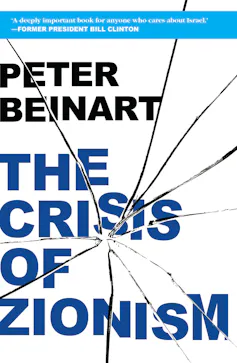
Given the brutality of Hamas and the upsurge of antisemitism, Jews today feel particularly vulnerable. But Beinart recognises that it is Palestinians who are the victims, trapped between Israeli occupation and groups like Hamas and Hezbollah.
Beinart is an American Jew with close connections to both Israelis and Palestinians. He has become increasingly sceptical of the call for a two-state solution, which was the basis of the 1993 Oslo Accords. Yet as Beinart makes clear, Israeli Prime Minister Benjamin Netanyahu has consistently worked against any realistic two-state solution.
Beinart wrote this book during the Obama Presidency; there is very useful background to the pressures now facing President Biden.
Mainstream Australian Jewish organisations appear unanimous in their support of the current Israeli government. The Crisis of Zionism speaks for the many Jews who believe only fundamental shifts in Israel’s policies can bring peace.

Given the brutality of Hamas and the upsurge of antisemitism, Jews today feel particularly vulnerable. But Beinart recognises that it is Palestinians who are the victims, trapped between Israeli occupation and groups like Hamas and Hezbollah.
Beinart is an American Jew with close connections to both Israelis and Palestinians. He has become increasingly sceptical of the call for a two-state solution, which was the basis of the 1993 Oslo Accords. Yet as Beinart makes clear, Israeli Prime Minister Benjamin Netanyahu has consistently worked against any realistic two-state solution.
Beinart wrote this book during the Obama Presidency; there is very useful background to the pressures now facing President Biden.
The Israeli-Palestinian Conflict: What Everyone Needs to Know
Recommended by Daniel Heller, Kronhill senior lecturer in East European Jewish History, Monash University

I would recommend Dov Waxman, The Israeli-Palestinian Conflict: What Everyone Needs to Know. This is a highly readable, engaging and accessible account of the origins of the conflict and the reasons it has proven so difficult to solve.
The book explains key events, examines core issues, and presents competing claims and narratives of both sides. Waxman also offers a range of Israeli and Palestinian perspectives, showing readers that there is no one Israeli or Palestinian view of the conflict, and that this very diversity of views is one of the reasons this conflict has proven so intractable.
The Arabs 1965
Recommended by Ian Parmeter, Research Scholar, Centre for Arab and Islamic Studies, Australian National University
I read The Arabs, by Anthony Nutting, during my first year living in the Middle East – in Cairo – in 1977 and I return to it regularly. A one-time Conservative MP, he was also Minister of State for Foreign Affairs and a confirmed “Arabist”. Like a number of others of his ilk, he resigned from the Foreign Office in protest over Britain’s inglorious role in the 1956 Suez crisis. The Arabs was published in 1964, so it does not cover developments in the past 50 years, but it provides the context of these events.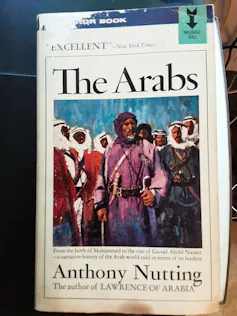
eBay
Nutting describes in highly readable detail the rich history of the Arab world and how it was upended by centuries of colonialism – first Ottoman, then British and French – and the appalling mistakes made by all three.
His book analyses in depth the growth of Zionism in the late 19th century and the key role the movement has played in the region since. It analyses the Sykes-Picot agreement of 1916, by which Britain and France secretly carved up the Middle East in anticipation of the Ottoman demise. And it analyses the influence of the pro-Zionist Rothschild family on the Balfour Declaration of 1917. It’s often forgotten that the declaration promised that in addition to a homeland for the Jewish people, “nothing shall be done which may prejudice the civil and religious rights of the existing non-Jewish communities in Palestine”.
Nutting’s account of the UN partition of Palestine in 1947 and the subsequent foundation of Israel through the 1948 war is detailed and masterful. Though his natural sympathies are with the Arabs and Palestinians in particular, he is unsparing in his account of their mistakes through hubris or elementary miscalculations. A gifted writer, he brings the events he describes into vivid focus.
I read The Arabs, by Anthony Nutting, during my first year living in the Middle East – in Cairo – in 1977 and I return to it regularly. A one-time Conservative MP, he was also Minister of State for Foreign Affairs and a confirmed “Arabist”. Like a number of others of his ilk, he resigned from the Foreign Office in protest over Britain’s inglorious role in the 1956 Suez crisis. The Arabs was published in 1964, so it does not cover developments in the past 50 years, but it provides the context of these events.

eBay
Nutting describes in highly readable detail the rich history of the Arab world and how it was upended by centuries of colonialism – first Ottoman, then British and French – and the appalling mistakes made by all three.
His book analyses in depth the growth of Zionism in the late 19th century and the key role the movement has played in the region since. It analyses the Sykes-Picot agreement of 1916, by which Britain and France secretly carved up the Middle East in anticipation of the Ottoman demise. And it analyses the influence of the pro-Zionist Rothschild family on the Balfour Declaration of 1917. It’s often forgotten that the declaration promised that in addition to a homeland for the Jewish people, “nothing shall be done which may prejudice the civil and religious rights of the existing non-Jewish communities in Palestine”.
Nutting’s account of the UN partition of Palestine in 1947 and the subsequent foundation of Israel through the 1948 war is detailed and masterful. Though his natural sympathies are with the Arabs and Palestinians in particular, he is unsparing in his account of their mistakes through hubris or elementary miscalculations. A gifted writer, he brings the events he describes into vivid focus.
The Ethnic Cleansing of Palestine
Recommended by Ned Curthoys, senior lecturer in English and Literary Studies, The University of Western Australia
Excavating a crime “utterly forgotten” by the West that the Palestinians mourn as the Nakba, in The Ethnic Cleansing of Palestine Israeli historian Ilan Pappe seeks to revise our understanding of the 1948 Israeli “war of independence”.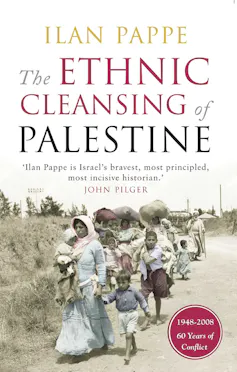
Rather than a David versus Goliath battle between a brave Jewish army and a hostile, rejectionist Arab world, he demonstrates that the exodus of the Palestinians was the result of Israel’s first prime minister Ben Gurion’s Plan Dalet. This was a plan to expel Palestinians from their villages and urban centres to realise the long-held Zionist dream of creating an exclusivist majority Jewish state by “transferring” the Palestinians to surrounding Arab nations.
Military tactics varied from massacres of entire villages to summary executions, sonic warfare, heavy shelling, dynamiting houses to prevent their occupants’ return, and the torching of fields. This was followed in later years by continuing land appropriation, military occupation and the “memoricide” of Palestinian communities. Pappe reminds us in a chilling epilogue that the “ideology that enabled the depopulation of half of Palestine’s native people in 1948 is still alive” and it drives the “cleansing of those Palestinians who live there today”.
Excavating a crime “utterly forgotten” by the West that the Palestinians mourn as the Nakba, in The Ethnic Cleansing of Palestine Israeli historian Ilan Pappe seeks to revise our understanding of the 1948 Israeli “war of independence”.
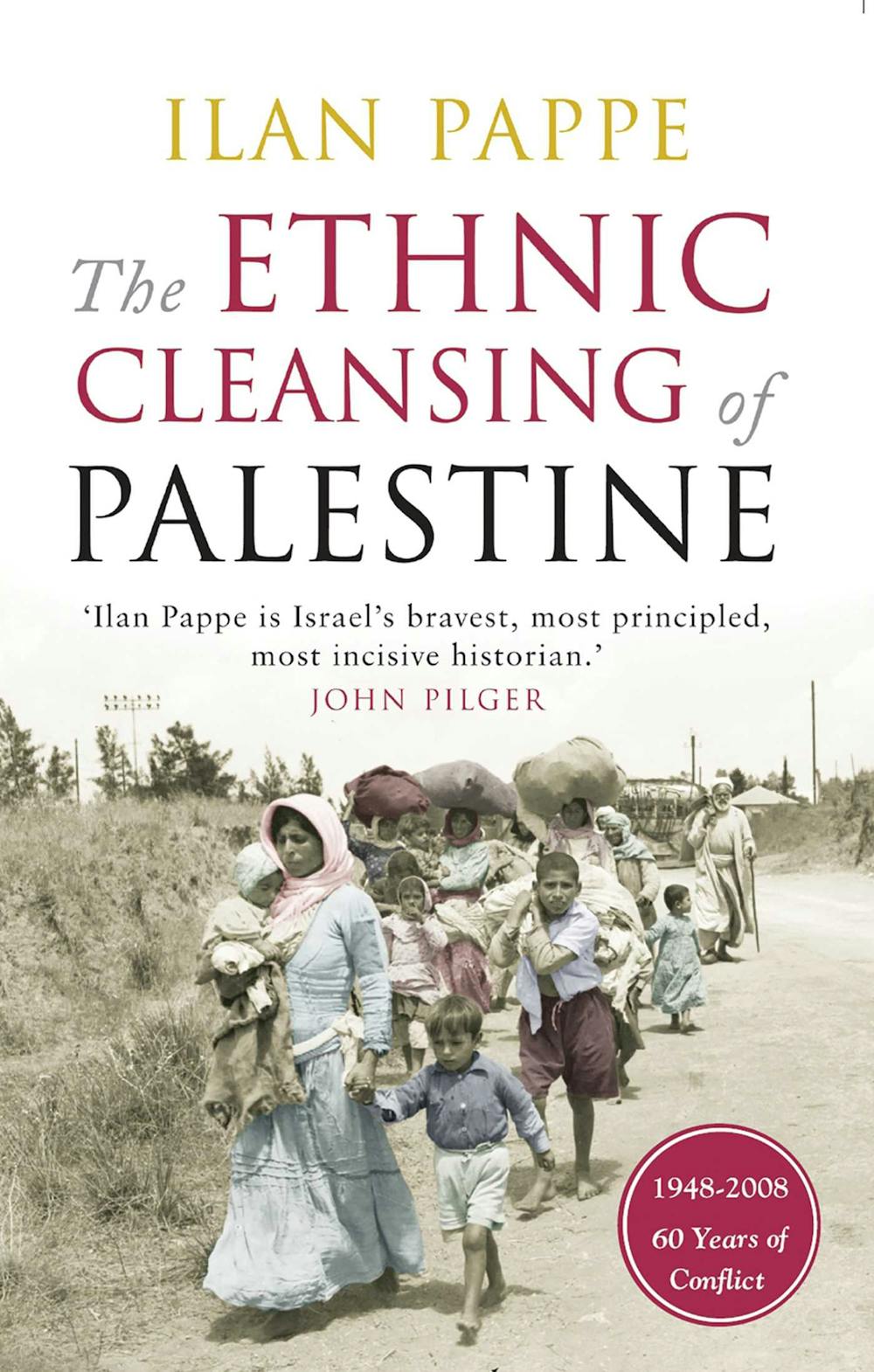
Rather than a David versus Goliath battle between a brave Jewish army and a hostile, rejectionist Arab world, he demonstrates that the exodus of the Palestinians was the result of Israel’s first prime minister Ben Gurion’s Plan Dalet. This was a plan to expel Palestinians from their villages and urban centres to realise the long-held Zionist dream of creating an exclusivist majority Jewish state by “transferring” the Palestinians to surrounding Arab nations.
Military tactics varied from massacres of entire villages to summary executions, sonic warfare, heavy shelling, dynamiting houses to prevent their occupants’ return, and the torching of fields. This was followed in later years by continuing land appropriation, military occupation and the “memoricide” of Palestinian communities. Pappe reminds us in a chilling epilogue that the “ideology that enabled the depopulation of half of Palestine’s native people in 1948 is still alive” and it drives the “cleansing of those Palestinians who live there today”.
Tolerance is a Wasteland: Palestine and the Culture of Denial
Recommended by Micaela Sahhar, Lecturer, History of Ideas, Trinity College, The University of Melbourne
Saree Makdisi’s Tolerance is a Wasteland: Palestine and the Culture of Denial will appeal to those attending Palestine-liberation rallies alongside tens of thousands in Australian capitals, to find little coverage of their scale and orderliness in the media.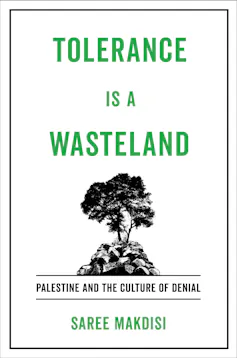
Makdisi outlines, in four comprehensive chapters, how context has been stripped from public understanding of Palestine over decades – obscured by projects that superficially espouse values celebrated in liberal democracies.
In one apposite image, he explains Israel’s state project of afforestation as a cover-up, obscuring vast ruins of Palestinian villages destroyed after Palestinian inhabitants were ethnically cleansed in the 1948 Nakba (the mass displacement and dispossession of Palestinians during the 1948 Arab-Israeli war). Yet, recent bushfires have revealed traces of the indigenous Palestinian landscape, and with it, “the naked truth”.
Makdisi says, “October 7 is like the forest planted over the ruins; what’s happened since is the ruins themselves”. By which he means, with little institutional outrage, much less intervention, this is how a second Nakba unfolds in plain sight.
Saree Makdisi’s Tolerance is a Wasteland: Palestine and the Culture of Denial will appeal to those attending Palestine-liberation rallies alongside tens of thousands in Australian capitals, to find little coverage of their scale and orderliness in the media.

Makdisi outlines, in four comprehensive chapters, how context has been stripped from public understanding of Palestine over decades – obscured by projects that superficially espouse values celebrated in liberal democracies.
In one apposite image, he explains Israel’s state project of afforestation as a cover-up, obscuring vast ruins of Palestinian villages destroyed after Palestinian inhabitants were ethnically cleansed in the 1948 Nakba (the mass displacement and dispossession of Palestinians during the 1948 Arab-Israeli war). Yet, recent bushfires have revealed traces of the indigenous Palestinian landscape, and with it, “the naked truth”.
Makdisi says, “October 7 is like the forest planted over the ruins; what’s happened since is the ruins themselves”. By which he means, with little institutional outrage, much less intervention, this is how a second Nakba unfolds in plain sight.
Israel
Palestine
Holocaust
Gaza
Hamas
Benjamin Netanyahu
Hezbollah
Zionism
Antisemitism
Nakba
Balfour Declaration
Two-state solution
Sykes-Picot agreement
All things literary, by experts.
Subscribe to our free weekly Books & Ideas newsletter for the latest reviews, essays and provocations from Australia and New Zealand's best writers and thinkers - in your inbox every Friday.
Subscribe now

Suzy Freeman-Greene
Editor, Books & Ideas

 (opens in new window)


