Customer reviews
4.4 out of 5 stars

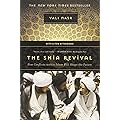
The Shia Revival: How Conflicts within Islam Will Shape the Future
by Vali Nasr
Profiled on the front page of the Wall Street Journal, Iranian-born scholar Vali Nasr has become one of America\'s leading commentators on current events in the Middle East, admired and welcomed by both media and government for his "concise and coherent" analysis (Wall Street Journal). In this "smart, clear and timely" book (Washington Post), Nasr brilliantly dissects the political and theological antagonisms within Islam. He provides a unique and objective understanding of the 1,400-year bitter struggle between Shias and Sunnis, and sheds crucial light on its modern-day consequences -- from the nuclear posturing of Iran\'s President Ahmadinejad to the recent U.S.-enabled shift toward Shia power in Iraq and Hezbollah\'s continued dominance in Lebanon. The paperback edition features a new foreword for 2007.
세진님, 요청하신 발리 나스르의 <시아파의 부활: 이슬람 내부의 갈등이 어떻게 미래를 형성할 것인가>에 대한 요약과 평론입니다.
<시아파의 부활: 이슬람 내부의 갈등이 어떻게 미래를 형성할 것인가> 요약 및 평론
1. 서론: 가려진 분열의 표면화
2003년 미국의 이라크 침공은 중동의 지정학적 판도를 뒤흔든 결정적 사건이었다. 하지만 발리 나스르는 이 사건을 단순히 독재 정권의 붕괴나 민주주의의 이식이라는 관점에서 보지 않는다. 그는 이 사건이 이슬람 내부의 가장 오래되고 깊은 균열인 <순니파와 시아파의 갈등>을 깨웠다고 주장한다. 이 책은 서구 세계가 이슬람을 하나의 거대한 단일체(Monolith)로 보았던 오류를 지적하며, 향후 중동의 미래는 외부 세력의 개입보다 이슬람 내부의 종파적 정체성 투쟁에 의해 결정될 것임을 예고한다.
2. 역사적 배경: 억압과 소외의 연대기
이슬람의 두 종파는 서기 632년 예언자 무함마드의 사후 계승권을 둘러싸고 갈라졌다. 혈통을 중시한 시아파는 초기부터 소수파로서 박해받았으며, 이는 그들의 신학적 기반에 <순교>와 <저항>, 그리고 <구원론적 기다림>이라는 서사를 심어놓았다. 현대에 이르러 대부분의 아랍 국가에서 시아파는 인구수와 상관없이 정치, 경제적 권력에서 소외되었다. 나스르는 이라크의 다수파였던 시아파가 사담 후세인의 수니파 소수 정권 아래에서 겪었던 탄압을 현대 갈등의 핵심 전사(前史)로 제시한다.
3. 이라크 전쟁과 판도의 변화
이라크 전쟁은 중동의 균형을 깨뜨리는 촉매제였다. 1인 1표라는 민주주의 원칙이 도입되자, 이라크 내 다수파인 시아파가 권력을 잡게 되었다. 이는 단순히 한 국가의 정권 교체가 아니었다. 나일강에서 중앙아시아에 이르는 지역에서 수세기 동안 지속된 <순니파의 패권>이 무너진 사건이었다. 이라크의 시아파 집권은 인접한 시아파 종주국 이란의 영향력 확대로 이어졌으며, 이는 사우디아라비아, 요르단 등 순니파 왕정 국가들에게 <시아파 초승달(Shia Crescent)>이라는 안보적 위협으로 다가왔다.
4. 시아파 정체성의 부활
나스르는 시아파의 부활이 단순한 근본주의로의 회귀가 아니라고 강조한다. 그것은 오랫동안 억눌려온 집단적 정체성의 발현이자 권리 찾기 운동에 가깝다. 이라크의 아야톨라 알 시스타니와 같은 인물들은 온건하면서도 단호하게 시아파의 정치적 지분을 요구했다. 이러한 움직임은 레바논의 헤즈볼라, 바레인의 민주화 운동 등으로 확산되며 지역 전체의 권력 구조를 재편하고 있다.
5. 평론: 종파주의라는 렌즈의 유효성과 한계
발리 나스르의 통찰은 중동 문제를 바라보는 패러다임을 전환했다는 점에서 높게 평가받는다. 그는 서구의 정책 입안자들이 간과했던 <종파적 정체성>이 실제로는 이슬람 세계의 가장 강력한 동력임을 설파했다. 그의 분석에 따르면, 중동의 분쟁은 민주주의 대 독재의 구도가 아니라, 누가 이슬람의 정통성을 대변하고 자원을 통제할 것인가를 둔 종파적 생존 투쟁이다.
하지만 그의 주장은 몇 가지 비판적 지점에 직면한다. 첫째, 모든 정치적 갈등을 종파주의로 환원하는 <종파적 본질주의>의 위험성이다. 중동의 갈등 뒤에는 종교적 차이뿐만 아니라 계급 격차, 도시와 농촌의 불균형, 그리고 강대국의 이해관계가 복잡하게 얽혀 있다. 종파주의는 종종 엘리트들이 대중을 동원하기 위해 인위적으로 가공하는 도구이기도 하다.
둘째, 이란의 역할을 지나치게 강조하는 경향이 있다. 이란의 부상이 시아파 부활의 핵심 동력인 것은 분명하나, 아랍 시아파(이라크, 레바논 등)는 페르시아인인 이란의 지배를 받는 것을 경계하며 독자적인 민족 정체성을 유지하려 한다. 즉, 시아파 내부에서도 민족과 국가적 이해관계에 따른 분열이 존재한다.
6. 결론: 피할 수 없는 내부 투쟁의 시대
<시아파의 부활>은 우리에게 불편한 진실을 말해준다. 서구가 강요하는 민주주의나 평화 프로세스가 이슬람 내부의 해묵은 갈등을 해결해주지 못한다는 사실이다. 이슬람 내부의 순니-시아 갈등은 그들 스스로가 거쳐야 할 고통스러운 조정 과정이며, 이 과정이 끝나기 전까지 중동의 안정은 요원할 것이다. 나스르의 책은 이슬람을 이해하기 위해서는 경전의 내용보다 그들이 지난 천 년간 서로를 어떻게 정의해왔는지를 먼저 보아야 한다는 점을 일깨워준 수작이다.
참고 사항: 위 요약과 평론은 원문의 핵심 논지를 유지하되, 요청하신 격식을 갖추어 작성하였다. 이 책은 2006년에 출간되었으므로, 이후 발생한 '아랍의 봄'이나 'ISIS의 발흥'과 같은 사건들이 이 종파 갈등을 더욱 심화시켰음을 염두에 두고 읽는다면 더욱 깊은 이해가 가능할 것이다.
From other countries
- nicolas mortazaviReviewed in France on 11 September 2016
Great work
A very interesting book. First part about the Shia background. The second (and most) part about the sunnia/shia relation in recent times. The iraqi part is brillant, a great complement of the story (from 'The EndGame of general Trainor and Gordon for example) from the shia point of view: the one person one vote part, the work of Sistani, how they feel betrayed by US. Another part about hezbollah is good but too short. An interesting reading. - Valendina SiheReviewed in Germany on 5 October 2013
good analysis
very well written and very interesting, also to people familiar with the topic. sheds an interesting light on current events. I dont necessarily agree with everything, but still I believe everybody interested in politics, middle east or islam, should benefit from this book in one way or the other. - CHRISTODOULOSReviewed in the United Kingdom on 4 August 2016
Essential reading if you are trying to make sense of the Middle East carnage
The infighting between Shia's and Sunnies has been going on since the appearance of Islam. Judging for the Christian perspective of Catholics Vs Orthodox I always thought that this divide was not that deep. I could not be more wrong!
The book goes into details staring from the emergence of the divide right up to nearly the present day and describes the philosophical differences between the two sects and the inevitable politics that go with them. After reading this book one comes to understand the bombings and atrocities of Sunny versus Shia and becomes very pessimistic about the prospects for peace in Iraq and the Middle East in genera.
Essential reading for those trying to make sense of why things are as they are today in the Middle East. - NathikReviewed in India on 19 March 2017
Future of Middle East: From Shia Prespective
The thesis of the book is that the revival of Shiism and redistribution of power and resource between Sunni-Shia population will decide the future of Middle East. Most books and commentaries available in Middle East politics are exclusively written from Sunni perspective. This book provides a fresh perspective of Middle East politics from the Shia point of view. Overall, the book lacks sound political and historical analysis. The entire content can be summarized in a blog. Anyone familiar with the region's history can skip it, in my view. - I. PattonoReviewed in Italy on 3 May 2017
highly informative
The book is not exactly above the fray (the author is partial for Shiism and the more you read the more you notice it)but is very well written, clear and highly informative. A real help in understanding what is going on there. By the way the book isn't brand new but hasn't lost its value. - 黒羽夏彦Reviewed in Japan on 11 February 2010
シーア派を軸に中東紛争の構図を整理
本書は、シーア派・スンニ派の対立を歴史的起源から説き起こし、政治史的・思想史的に概観した上で現代における中東紛争の構図を提示する。宗教的教義だけでなく、文化、民族、国家、欧米への態度(とりわけ反米)、様々な要因が複雑に絡まりあい、しばしばシンボル操作も伴って、そこから生じるダイナミズムが中東を舞台とした大規模なアイデンティティ・ポリティクスを展開していると言えるだろうか。イラン・イスラム革命とイラクのサダム・フセイン政権崩壊によって、これまでスンニ派によって押さえつけられてきたシーア派が台頭、こうした事態をスンニ派は脅威と受け止め、両者の対立がこれまでにないほど高まりつつあるというのが本書の示す見通しである。シーア派内部とて決して一枚岩ではなく、様々に楽観を許さない複雑さを本書は整理してくれる。 - Tim F. MartinReviewed in the United States on 20 November 2006
Fantastic overview of the history and importance of the Shia
_The Shia Revival_ by Vali Nasr is a well-written and timely analysis of the history and nature of the greatest division within the Muslim world, that of the 1,400 year old split between Sunnis and Shiites, a division existing from practically the beginning of the faith, each sect viewing itself as the "original orthodoxy."
Though stressing that the Shias (like the Sunnis) are hardly monolithic, varying in degrees of piety and because of different cultural and economic backgrounds, Nasr listed a number of key characteristics of Shias worldwide.
Though Shias are a minority of the world's 1.3 billion Muslims (comprising 130 to 195 million people or about 10 to 15% of the total Muslims in the world), they are as nearly numerous as the Sunnis in the Islamic heartland from Lebanon to Pakistan and around the Persian Gulf comprise 80% of the population.
The Shia-Sunni split dates back to the succession crises after the death of the Prophet Muhammad. - Sunnis came to accept the notion that successor caliphs to the Prophet (perhaps individuals chosen by the community) need not possess exceptional spiritual qualities but merely be exemplary Muslims who could direct the religious and political affairs of the community and still later accepted future rulers so long as they maintained order, protected Islam, and left religious matters to the ulama (religious scholars).
What became the Shiites disagreed with this, feeling that the true leaders of the community should not be "ordinary mortals" but should instead be Muhammad's family - popularly known as the ahl al-Bayt or people of the household - as the blood of the Prophet ran in their veins along with the spiritual qualities invested in him by God.
Similarly, Sunnis and Shiites differed widely on matters of religious interpretation. Sunnis came to believe that all believers are capable of understanding religious truth in a way and to a degree that makes special intermediaries between God and man unneeded, - while Shiites came to feel that there were outer and inner, hidden truths in religion, and that without the right leadership the true meaning and intent of Islam will be lost. Shiites believed that there is hidden and esoteric knowledge, inaccessible to the average believer without help.
The Shiites placed a great deal of emphasis on the history of the early rightful successors to the Prophet and on Shia saints and consequently also have a great love for visual imagery depicting these individuals and their struggles (most of which ended in martyrdom). This love of imagery grates on Sunni sensibilities, who often view it as "possible inducements to, if not outright expressions of, idol worship." Related to this is the great Shia festival of mourning, remembrance, and atonement known as Ashoura, a religious festival and drama akin in many ways to Christian festivals such as Good Friday "Way of the Cross" processions. As Nasr put it, while Sunnism "is about the law and the "thou shalts" and "thou shalt nots" of Islam, Shiism is about rituals, passion, and drama." Sunnism and Shiism differ not so much because of divergent practices but because of the spirit of their interpretation of Islam.
Shias, much like Christians, have a strong millenarian streak as well. They believe that the line of imams (descendents of Ali, son-in-law of Muhammad, first rightful successor to him) continued through the tenth century, when the Twelfth Imam, Muhammad al-Mahdi (the Guided One) was taken by God into a miraculous state of occultation in 939. His return will be the "end of time and the advent of perfect divine justice." This messianic framework of belief (along with the martyrdom of the imams and of Shia saints) have been key influences on Shiites and resonate in events today, such as Shiite views of the Iranian revolution, the disappearance in Lebanon in 1978 of the popular leader Imam Musa al-Sadr (some felt he had been miraculously occulted), and in the actions of Muqtada al-Sadr in Iraq (who named his militia the Mahdi Army, implying that his cause was that of the Twelfth Imam).
The key reality of the Middle East today is the Sunni-Shia conflict. The most important outcome of the war in Iraq, its "central legacy," has been that Iraq has become the first Arab-majority country to be ruled by a democratically-elected Shia majority, tipping the scales against the long Sunni domination of the Middle East. Though the Shia revival began with the Iranian revolution and Hezbollah gains in Lebanon against Israel, today it is about "protecting and entrenching" Shia gains in Iraq. Shia success there will lead to greater ties among Shias throughout the Middle East, Pakistan, and Afghanistan and increased Shia demands for a greater political role everywhere. This Shia revival rests on three pillars; the newly empowered Shia majority in Iraq, the rise of Iran as a major regional power, and the empowerment of Shia populations in Lebanon, Saudi Arabia, Kuwait, the United Arab Emirates, Pakistan, Bahrain, and Afghanistan.
This revival will result in a huge Sunni backlash - as shown by the actions of such Sunni organizations as the Taliban and al-Qaeda - and if anything will strengthen anti-Americanism in the region, as the revival comes at a time of rising Sunni extremism. Anti-Shia feelings and actions by the extremists will hurt the U.S., as anti-Shia feelings will solidify Sunni public opinion and expand the influence of groups such as al-Qaeda.
Nasr does see hope though as well. Shiites will be much more likely to work with the U.S., as both the U.S. and the Shiites share a common enemy (Sunni extremists) and greater democracy in the region (a stated U.S. goal) will add Shiite empowerment throughout the region. The U.S. has already been of great aid to the Shiites, removing Saddam Hussein and empowering the Shia majority in Iraq (efforts at de-Ba'thification in Iraq have really been de-Sunnification efforts) and taking down the "Sunni wall" around Iran, as for a time Iran was constrained by Sunni-dominated Iraq to the west and a Pakistan-Taliban-Saudi axis to the east. - Cliente AmazonReviewed in Italy on 6 February 2016
Interessante ma disorganico
Interessante per le notizie ed informazione ni fornite ma scritto in maniera molto disorganica. Anche l'inglese non è dei più classici da leggere - Dennis MooneyReviewed in the United States on 29 August 2014
Not bipartisan and ignores the role of the Bush administration
Vali Nasr's book “The Shia Revival: How Conflicts within Islam Will Shape the Future" is an excellent introduction into the history of the Middle East conflicts. The biggest drawback to purchasing this book is that it was clearly written in 2005 and published in 2006 so it is grossly out of date. I highly recommend the book but want you to understand the caveats.
While I enjoyed the book tremendously and learned a great deal there is room for both praise and criticism.
I was looking for a book that would explain the divides within the Muslim world from a historical perspective and this book clearly meets that objective. The book spends a great deal of time covering the Islamic world from the death of The Prophet in the 7th century until the 12th century and uses examples of historic events that are echoed by current and past players (Hussein, Khomeini, Sistani, Assad) in this region. It barely covers anything between that time and 9/11. That's not a drawback because it's really since 9/11 that Americans have been so focused (but dangerously misinformed) on events in the Muslim world.
This is not a book about the Middle East. Israel figures only marginally in this book. This is a book about Muslim politics and the two major Islamic faiths- Sunniism and Shiism.
Several other reviewers said that the book is nonpartisan but I disagree with that. The author is Iranian born a Shiite Muslim. The book is written from the viewpoint of of Shiite and takes aim directly at the Sunnis. Throughout the book Sunnis are cast as the extremists where Shias are cast in the role of historical underdogs and mediators. That's not to say Shias don't get some of the blame from Nasr for the Middle East tragedies but the division of fault is unbalanced and his criticism of Shias comes finally in the last two pages.
Nasr identifies the 1979 Iranian Revolution and the beginning of the rise of the Shias. Nasr does an excellent job of painting the good and the evil of the Ayatollah Khomeini and his central role in the Iranian Revolution. Anyone wanting to understand more about the character of Khomeini will find it in this book. While we find deep character analysis of Ayatollah Khomeini the analysis of Iraq’s Ayatollah Sistani, also Shia, is less intense and paints Sistani as a great moderate.
After reading the book one comes away with a clear understanding of how the war in Iraq has plunged the Middle East into the chaos that we see today. The author clearly identifies the US led invasion of Iraq as a dramatic escalation in Middle East conflict and a force in more widespread Shia power.
The greatest fault with the book is that nowhere does the author analyze the roles and motives of those who brought the war to Iraq. The author dances around the sensitivity of the subject because at the time the book was written George W Bush was still the President and the author had a rooted interest in seeing the American role in Iraq continue. Remember while the Iraq invasion removed Saddam Hussein, a Sunni, from power it shifted the power almost entirely to the Iraqi Shia majority. The book implies that the Bush administration may have been unaware of what impact this shift would have on future world events. (The index links to 2 mentions of Bush 43 in the whole book)
Nasr's most recent book "The Dispensable Nation” is highly critical of the Obama administration and how, in the author's opinion, Obama has deserted Iraq and therefore the Shias.
"The Shia Revival" examines the role of Hezbollah in Lebanon, the Assad regime in Syria, Islamism in Pakistan and the influence of the Royal Saudi family but pays scant attention to the events and tragedy of 9/11, Afghanistan and the Taliban. Nasr suggests that the anti-American part of this conflict is a diversion from the real issue- hatred between Sunni and Shia factions of Islam. Nasr further points out that extreme sects within the Sunni faith re using American hatred as a recruiting weapon when their real target is the Shia.
Nowhere does the author discuss the close ties between the first and second Bush presidencies and the Saudi royal family. Only when I read the New York Times review of the author's follow-up book did I understand clearly how the author wanted to avoid criticizing the Bush government but certainly spares no criticism of the following administration.
A possible reason could be because the author views Bush as the liberator of the Shias in Iraq and the subsequent withdrawal of American troops by Obama as having a tragic impact on Shias. This partisan viewpoint recasts “Rise of the Shia” in a much more unfavorable light.
Ahmed Chalabi, an Iraqi born Shia and President of Iraq for 30 days gets only scant mention in the book. His purported influence, using false information, on VP Dick Cheney is not discussed at all. To me, another red flag that only part of the story is being revealed.
Nasr is an Iranian born American, distinguished scholar and is clearly passionate and knowledgeable about the history of the Middle East but he comes at his analysis from a distinctly partisan Shia point of view.
I highly recommend reading this book but to think one understands the Middle East after reading this book alone would be a mistake. It is one viewpoint but an essential one. If you are new to Muslim politics or simply want to start understanding the history behind the Muslim turmoil this is an excellent book to buy.
My journey into understanding the Middle East continues but I will now seek an alternative narrative for my next book. - John GReviewed in the United Kingdom on 25 July 2013
Essential reading for Western politicians
I found this book a very valuable read. It is heavy on detail, at times the detail becomes a little onerous, but you just need to stick with it, as by the time you get to the end you will have a far greater understanding of the dynamics of the region than you could imagine. Every Western politician should be made read this book before uttering one word on the Middle East.


- Michael G. FrancisReviewed in Canada on 25 July 2016
A bit hard going but well worth the effort
I love Tolstoy. When I try and force War and Peace on my family the complaint is, " I can't keep the names straight". The Shia Revival has that problem in spades. The names are complex and, to me, instantly forgettable. But the writing is good and the subject both interesting and important. I am not particularly interested in the theology of Islam. I have been very interested in the Iraq wars and have tried to assess the morality related thereto. I have been skeptical of America's relationship with Saudi Arabia. After reading this book I think I understand the big issues that are at play. I'm very glad I stuck with it. - Abbas AhsanReviewed in India on 17 April 2021
Paper quality sucks
If i had an option to give a minus rating i would have definitely given that.... The paper quality is pathetic. You should be ashamed to sell it at such price! - Cliente AmazonReviewed in Italy on 18 February 2016
The shia revival
A book which is well written and usefull. Should be an absolute must-read for everyone who pretend to understand the Middle East. - Bruce E. McLeod Jr.Reviewed in the United States on 14 September 2010
Great Lessons in Islam
The "Shia Revival", by Vali Nasr, was a terrific book which provided a thorough and objective analysis of Islam. His book outlined the history of Islam (which is deep, sensitive and complex), a chronology of Islamic events, hierarchical theologians and legends of dynastic rulers, saints and imams which should serve to enlighten the curious reader. The negative perceptions many westerners have of Muslims, in general, is skewed when compared to other major religions. Islam's culture and theology, founded in the 7th century, is the least known and quite possibly the least understood.
The "split" during the early years of Islam severed the followers of The Prophet Muhammad into two sects; Shia and Sunni. This caused an implosion within its ranks which created violence, hostility and an intense animosity that endures today. Attempts by past leaders to initiate pan-Islamic nationalism in order to showcase Arab unity, which could have assuaged the internal conflict, failed. In fact, in some instances, the reverse was true. The sectarian divide continues unabated. Islam has not had a reform movement in its religious doctrine since its founding. The feeling, I believe, is that to "modernize" is to "westernize" and that, I also believe, is anathema to their basic religious principles and esoteric philosophy.
Vali Nasr's book provided detailed information concerning the tensions and hostile feelings exhibited by Iran leaders towards the West and the causes attributed to outbreaks in international relations. Further, he produced evidence that Muslim terrorists in Arab countries are engaged in wars on two fronts; one against the West and one internally against extremists of each religious sect. Fifteen percent of the Muslim population are Shia, with the largest group living in Iran, whose influence in Iraq and, in particular, the Middle East, is keenly felt, given the political environment that currently exists. Shias, living in other countries, dominated by a Sunni-controlled majority, are a distinct religious minority even though they are as ethnically Arab as their religious counterpart.
A rear view look at Iran's history in early 1920, saw its concessions and patrimonies sold off by formerTurkish tribal leaders to the British and Russian governments who, at the time, considered Iran's leaders to be inept and backwater culturally and politically. During the early 1950's, when Iran's President attempted to gain control of their oil fields, the U.S. Government intervened, at the behest of the British, and deposed him. Those actions set the stage for much of the present day anger which produced a "fundamentalist" movement that created an Islamic Theocratic Republic. Prior to that outlandish coup d'etat, Iran was headed towards a democratic government. The world will never know what could have been as the political environment in the Middle East continues to embroil.
Increasingly, U.S. political leaders hurl jingoistic rhetoric and unwarranted aspersions at Iran, which may have galvanized the populace to push back against the USA, thus creating negative attitudes within the American psyche against all Muslims. If Islam is to change, it will be the decisions of its leaders and not by outside influences. With the Muslim world population standing at 1.5b, that seems highly unlikely.
Bruce McLeod, Jr.
Las Vegas, Nevada - Nikiforos V FokasReviewed in the United Kingdom on 7 June 2018
Tempers run.
Or how 16th century messianic Ishmael Safavid, of a militant Sufi sect from Azerbaijan, changed the course of modern-day geopolitics in west Asia by laying down of deep Shi'ite roots that are now firmly entrenched in Iran. Or, also, how a certain massacre in Karbala many hundreds of years previously was the initial seed. This book permits us a peek at why tempers run so heated. And they do still, despite history playing out quite differently since publication. - Hussain Abdul-HussainReviewed in the United States on 15 January 2007
Shia Propaganda
Vali Nasr, the son of a Shiite religious man, offers his views of Shiism. According to Nasr, Iran's Ayatollah Khomeini and his non-Shiite view of the rule of Ayatollahs has led the West to fear Shiism. Yet, Nasr believes that Khomeini is the exception rather than the rule in the Muslim world and that the dominant Shiite thought is a moderate one such as that of Iraq's Grand Ayatollah Ali Sistani. Nasr argues that Shiites, consisting of 10-15 percent of the Muslim world and so far the political underdogs, currently view democracy as the vehicle toward improving their stance.
While Nasr offers a comprehensive description of Iran, his analysis on Arab countries is very weak, especially in Lebanon. Nasr believes that the Shiites in Lebanon consist close to half the population. This is far from being true since the Lebanese Shiites consist 29 percent of the population ranking third after the Christians at 35 percent and the Sunnis at 30 percent. The Shiites of Lebanon have been stirred by the Syrian regime, an ally of Iran and its radical mullahs. The Shiites did not score any sudden success in Lebanon through elections in 2005 but through the Syrian control of Lebanon since 1991.
Also, if taking Nasr's assumption into account that the Shiites have an advantage should democracy prevail in the Muslim world, only applies to three countries namely Iraq, Bahrain and Iran. Shiites already rule Iran and they currently have the upper hand in Iraq. If they take over the small Bahrain, their newly won nation would not result in any significant change at the regional level. If democracy prevails, the Shiites would remain a minority in Lebanon, Pakistan and Saudi Arabia. In Lebanon, where the Shiite minority lost prominence after the Syrian withdrawal from Lebanon, the Iranian-influenced Lebanese Shiite leadership has not yet displayed any special understanding of democracy other than sabotaging state institutions in favor of their regional affiliations.
The Shiites of Iraq have not proven moderate either. While the Sunni minority, who had lost power after the downfall of the Saddam regime, has employed all kinds of extremist means to stop Shiites from ruling Iraq, the Shiites have not stayed idle as Nasr implies. On the contrary, they have matched the Sunni violence by forming their own death squads and employing counter-terrorist means in which they cleansed Sunnis from their areas.
Unlike how Nasr puts it, the Shiite minority in the Muslim world is not as democratic and is rather the other face of the extremist non-secular coin. The US would commit a mistake if it tips the regional balance in their favor. Solutions in the Middle East would only come through comprehensive secular plans that would not depend on the influence of one religious establishment or thought. - asaadReviewed in Canada on 18 December 2015
Two Stars
CONFUSING BOOK - Mohammed S. KanjiReviewed in the United Kingdom on 31 December 2011
The Shia Revival How Conflicts within Islam Will Shape the Future
If you are interested in in religious conflicts then this book is for you although my thinking is different then the writer. - Raza ChaudhryReviewed in the United Kingdom on 18 March 2019
Worth reading!
I feel that it's worth reading for anyone interested in learning about the internal problems in the Islamic community. =) - ealovittReviewed in the United States on 17 February 2007
I wish everyone in our government would read this book
Many of the current authors who write about Islam stand accused of Islamophobia, but Vali Nasr is not one of this group of hard-line conservatives. He can be labeled as pro-Shia, although not as particularly anti-Sunni. He comes across (to me at least) as an apologist for the minority religion within Islam.
He also comes across as supporting the current U.S. invasion of Iraq, as better than doing nothing and letting the Sunni extremist groups such as Al Qaeda slaughter the Shia majority. This book will make clear many of the mysterious and murderous conflicts that are taking place in Iraq, including the recent attempt on Grand Ayatollah Sistani, the spiritual leader of Shias, by a group of `End of Days' coreligionists.
According to Vali Nasr, the Shia are the butt of jokes and stories about stupidity and bad hygiene in the Sunni world (85 - 90% of Muslims), and in some countries, e.g. Saudi Arabia, they are not granted full citizenship. They split off from the majority Sunni twenty-four years after the Prophet Muhammad's death in 632 A.D. Sunnis accepted the rule of elected caliphs, while Shias recognised only imams, descendants of the Prophet through his daughter Fatima and his cousin and son-in-law Ali (descendants, who like Moqtada al-Sadr, leader of the Mahdi militia in Iraq, wear the black turban). The Twelfth Imam, who disappeared in Samarra in 874 A.D. is the `Hidden Imam' who is expected to return in the 'End of Days' (by some Shia, at least) to re-establish Islam throughout the world.
In the 16th century, the Shia Persian Safavid dynasty battled Sunni Ottomans for control of Iraq, and Sunni militants in Iraq today still describe Shia opponents as "Safawis". Ever since the overthrow of the Shah in Iran by Shia militants, orthodox Sunni Arab leaders, including Jordan's King Abdullah have been warning of a "Shia crescent" stretching from Iran through Iraq to Syria and Lebanon (where Iran is supporting the Shia Hezbollah), and destabilising the world's oil supply. Anti-Shia paranoia seems to be sweeping through regions where Shia and Sunni lived in peace (although not necessarily in equality) for many centuries.
"The Shia Revival" is up-to-date (08/2006) and very readable. It educated me and at the same made me crazy at our government's ignorance of the conflict we got ourselves into. Americans obviously didn't cause the Sunni-Shia rift. We seemed to have blundered into Iraq for the wrong reasons, accidentally empowered the Shia majority, and are now being pressed by our Sunni allies to fear the so-called `Shia Crescent.' This book could go a long way toward alleviating that particular fear, especially in the case of Iran. I strongly recommend it to anyone who is interested in how conflicts within Islam will shape our future, regardless of our own religious beliefs.


- Arcane ThoughtReviewed in the United States on 16 February 2026
Shia in the news.
Very readable primer on the history of the Shia up until about 2006. - ConnoisseursReviewed in the United Kingdom on 31 March 2015
Essential reading: balanced yet hard-hitting
Nothing much I can add to earlier reviews. Nasr is informative, writes powerfully, and mixes anecdotes with hard facts in this classic book. - EnlightenedReviewed in the United Kingdom on 14 October 2012
The Shia Revival
The Shia Revival. For anyone who wishes to understand the problems between the Shia faith and the Sunni faith this is essential reading. Excellent. - a readerReviewed in the United States on 16 September 2006
Essential reading
Years ago in a world religions course I took at a conservative, inter-denominational seminary I learned all about the conflicts in Islam that are explained here by author Vali Nasr. If we understood this when we were rushing toward the invasion of Iraq, then we would have realized that the sectarian conflict that we now have in Iraq was quite predictable.
I'm a lifelong conservative, but that moniker today seems to signify willful ignorance (Bill O'Reilly, Ann Coulter, President Bush). That's an embarrassment and a disgrace. It's time to get informed and make wiser decisions. "The Shia Revival" is a good place to start re: Islam. Here are some quotes from the book that 99.9 percent of Americans (including Condi Rice) might find particularly enlightening...
"While outside the Muslim world the violent anti-Westernism of the Taliban and al-Qaeda appears most prominent, there can be no question that intense hatred of Shias and Shiism is an important motive for both these Sunni terror groups."
AND
"It is clear today that America cannot take comfort in an imagined future for the Middle East, and cannot force the realization of that future. Such an approach guided the path to war in Iraq and has proven to be unworkable. The lesson of Iraq is that trying to force a future of its liking will hasten the advent of those outcomes that the United States most wishes to avoid. Through occupation of Iraq, America has actually made the case for radical Islam---that ours is a war on Islam---encouraging anti-Americanism and fueling extremism and terrorism. The reality that will shape the future of the Middle East is not the debates over democracy or globalization that the Iraq war was supposed to have jump-started, but the conflicts between Shias and Sunnis that it precipitated. In time we will come to see this as a central legacy of the Iraq war....
The war in Iraq may take many directions. The country may split up or hold together; it may sink into civil war, or its competing communities may hammer out a power-sharing formula to make it work. Stability will require compromise among Shias, Sunnis, and Kurds, but it will still place Sunnis at the bottom of a power structure that they once ruled. This will not douse the flames of Sunni extremism that Iraq has stoked across the Middle East. The United States cannot decide what direction sectarian conflict will take. It will instead have to prepare for the unintended consequences of the Iraq war. A second explosion of Islamic extremism will come out of the Iraqi insurgency, whose force and tenacity will be entwined with the Shia-Sunni power balance across the Middle East, and which will seek to use sectarian conflicts to expand the scope of its jihad across the region." - JohnReviewed in the United Kingdom on 8 December 2016
Five Stars
Learned but easy to read and open minded. - Retired ReaderReviewed in the United States on 14 June 2007
Another fine mess.
One of the many unintended consequences of Operation Iraqi Freedom has been to open the possibility that the Shia population of Iraq may gain political control of that unhappy country. As this book makes clear, the Shia, although a religious minority within the larger Sunni Islamic Religion, do constitute the religious majority in Iraq. The prospect of Iraq as an independent Arab Shia nation state is one that excites Shia everywhere in the Near East and South Asia. Such an event would very likely lead to serious political consequences particularly in the Persian Gulf. The title of this admirable book refers to this possibility.
It is in anticipation of this revival that Vali Nasr has written an excellent account of the Shia providing the reader with the history of the sect and a description of its current political-religious dynamics. As an absolute religious minority the Shia have a long history of persecution and discrimination by the majority Sunnis in all Islamic countries, even Iraq where as noted they were actually in the majority. In particular the currently popular Sunni fundamentalist Salifi Movement and its principal theology of Whahhabism have been intolerant of the Shia. The possibility of an Iraq under the control of the Shia then is more than disconcerting to such countries as Saudi Arabia, Kuwait and the UAE all of whom have substantial Shia minorities. Then there is the Hezbollah movement in Lebanon which although primarily supported by Iran, would be greatly emboldened by an Arab Shia state.
Then there is Iran itself. Iran, like Turkey, is a non-Arab Islamic State, but unlike Turkey it is under the control of a Shia majority and, with Iraq, has always been a major center of Shia religious thought and training. As with every thing else in the Near East the relationship of the Arab Shia population to Persian Shia Iran is complex and filled with contradictions. Yet there is little doubt that Iran would be delighted to have an Arab Shia state as a neighbor.
Nasr, a Persian-American Shia, has indeed produced an outstanding and timely account of yet another little known, but vitally important factor in that churning cauldron that is the realm of Islam. - Amazon CustomerReviewed in the United States on 29 October 2015
How the Shia revival will shape our future
In Vali Nasr’s book The Shia Revival: How Conflicts within Islam Will Shape the Future, he addresses an issue that is gaining increased importance in the modern analysis of global Islam: Sunni and Shia relations and which he also states is going to shape our future. Vali Nasr, a Middle East scholar writer, foreign policy adviser and commentator in international relations describes how Shia and Sunni differs from each other and how U.S military actions towards the war against Saddam and Iraq, and the willingness to expand democracy to the world the east countries, might lead to a Shia resistance. This is a world portrayal that offers an understanding of the ancient conflicts and the struggle that Middle East is facing within the world of the Muslim religion. Nasr points out US involvement in this situation and how US as a country have to gain more knowledge and respect towards this world dilemma and conflict that effects more people that a person without the knowledge in the subject wouldn’t have known about. Nasr goes from talking about history to our present situation and how we need to act in the future, “What is clear is that the future for the Middle East will not be brighter than the past so long as the shadow of sectarian conflict hangs over it. This is the conflict that will shape the future” (Vali Nasr). This is a book that should be read by anyone who does not have the knowledge about the Shia difference. Nasr writes in a way that make it easy to understand and he approaches the subject in a way that makes it very interesting and makes one think about our current situation. - A.D.Reviewed in the United States on 29 May 2011
Elucidating, but pro-Shia tint
Nasr uses the term "Shia revival" to refer to the growing empowerment of Shias in the Middle East, especially in Iraq, and a new consensus for increased public piety among Shia communities. Nasr says the revival does not mean that Iranian influence is on the rise. However, one suspects that the Nasrallahs, Sadrs, and Khameneis of Shia Islam have far more sinister designs than simply encouraging Ashura celebrations.
The Shia Revival is not journalism or a textbook. It is well-researched commentary. It is also biased on behalf of Shia Islam and its expression in the Middle East. For example, Nasr writes that Shia history is a "tale of martyrdom, persecution, and suffering," and that "the Shia bore the brunt of popular frustrations with the failures of Sunni rulers." Nasr attempts to put space between Iran and the Shia revival, saying that the revival "is not associated with any single form of government" without providing much evidence for that claim. Nasr reserves his most glowing comments for Shia grand ayatollah al-Sistani of whom he writes, "He did not attempt to add line or color, but only to provide the canvas on which the Iraqi Shia community could paint its future."
The book is informative without being heavy. But, due to the pro-Shia slant, it would best be read as one dish from a buffet of additional perspectives and not be swallowed as a single serving. - W. Lynn JohnsonIReviewed in the United States on 16 May 2007
Understanding Shia and Sunni
A recent book, The Shia Rivival by Vali Nasr provides a highly informaed understanding of the current religious schism/war/conflict within Islam which the media prefers to call a "sectarian divide." It provides pretty much everything intelligent American (or other Westerners) need to
know about the origins of the Moslem schism, its history over 1400 years, is geographic distribution, its relationship to Arab nationalism, terrorism, and Democracy, and its place in current and likely future events. While this book is a little too detailed for general readers, it is definitely worth the extra effort for its insights and thorough understanding. Vali Nasr is a politically neutral guide. He is professor or Middle East and South Asian politics at the Naval Post Graduate School and a senior fellow of the Council on Foreign Relations. From his writing you can't tell if he is a Democrat or Republican and it doesn't matter. The book should be equally relevant to both. - DMAReviewed in the United States on 5 November 2015
Book Review
The Shia Revival: How Conflicts within Islam will Shape the Future by Vali Nasr argues “The reality that will shape the future of the Middle East is not the debates over democracy or globalization that the Iraq war was supposed to have jumpstarted but the conflicts between Shias and Sunnis. ” Not only does Nasr supply ample evidence to make this book accessible to both academic and less formal audiences, he supports his assertions with a mix of primary and secondary sources. Sprinkled with dialogue from Iraqi war generals and ample use of secondary sources centered around historical Shia and Sunni events, Nasr’s work is both compelling and riveting, offering an unparalleled look into the deeply layered world, and the ancient conflict between the Shia and Sunnis in the Middle East. This is both an enlightening an emotional treasure to explore.

- C. GoyetteReviewed in the United States on 19 March 2007
Does American leadership understand the Islamic conflict?
It's not an easy read. It covers a very complicated subject with deep roots that date back to the very establishment of the Shia faith some fourteen centuries ago who base their belief that God would not entrust his religion to ordinary mortals and that Muhammad's family were the true leaders of the Muslim community.
Considering this book discusses the revival of Shiism, I did not detect any appreciable bias favoring the Shia over the Sunni faith. Reading it actually provided me a great deal of insight for the overall struggle that exists in the Islamic world today. The complexities of modern Islam are enormous driven not only by religion but also by demographics, race, and the persistent meddling of foreign powers.
My primary motivation for reading this book, however, was to assess the wisdom of America going to war in Iraq. Unfortunately, I came away with an aching feeling that our leaders were at best naïve involving us in something they failed to understand themselves. - Nail H.Reviewed in the United States on 24 January 2016
Clarifies issues in the Middle East
The beginning had a bit of a slow feel to it as it was describing the Ashoura and other cultural aspects but once past the 20% mark things started to get fairly illuminating, covering Wahhabism in Saudi Arabia, revolution in Iran, the Saudi-Iran battle for domination of the Middle East, the violent insurgency in Iraq after US occupation. Sometimes I was wondering whether there is a bit of a bias in Shias' favor. The Sunnis don't emerge with my sympathy at the end of reading the book. It was interesting to see that many times calls for restoration of Islamic traditions are in fact calls for restoration of Sunni dominance and what is happening in Iraq and Syria at the moment is in line with what is being described in the book. One thing I was missing was a discussion of Syria, the one country where it might be the case that Shia minority is suppressing the rights of Sunni majority. - Matthew J BarrettReviewed in the United States on 28 October 2015
and respected periodicals like Newsweek and Smithsonian
In The Shia Revival, Vali Nasr argues that the United States of America must rethink foreign policies regarding the Middle East, as the Muslim world is a changing climate. To support this argument, Vali Nasr has meticulously researched the majority of The Shia Revival, using sources such as well-respected newspapers (The Washington Post, The New York Times, and the Los Angeles Times, for example), PhD dissertations from respected institutions, books published by those same institutions’ presses, Human Rights Watch Reports, and respected periodicals like Newsweek and Smithsonian. While Nasr uses a myriad of exceptional sources in support of each chapter’s central theme, The Shia Revival does rely quite a bit on the author’s own unvalidated firsthand reports. Another issue facing The Shia Revival is that it would best be prefaced by a rudimentary understanding of Islamic leaders and customs. While I did enjoy the book, I had a very difficult time following the overwhelming cast of characters of the Islamic world. In general, the book would be a great read for those highly interested in, if a bit uninformed of, the issues facing the current climate of the Muslim world. - Joseph F. BirchmeierReviewed in the United States on 1 January 2008
A View Into the Mind of the Shia
In order to understand the people of the Middle East - you always have to try to understand their point of view or perspective. This book does a wonderful job of providing the perspective or view of the Shia. I will grant that the book obviously has a pro-Shia slant, but like most books written, the motive of the author as well as his background must be taken into account. However, just because this book offers a pro-Shia slant does not make the book any less valuable - because it does, in my opinion, attempt to provide an accurate portrayal of the Shia and how they view the world. In my opinion this is an incredibly valuable book to understand in order to participate in the many on-going debates about U.S. involvement in Iraq and the impact that our invasion of Iraq has had and still can have in the Middle East.
Highly Recommend - relatively quick read and easily understood. - Will JeromReviewed in the United States on 24 January 2008
Excellent Insight into Shia Islam
This is an excellent book, summarizing the basis of the Shia religion and their differences with Sunni Islam. Tracing that conflict from the classical period of Islam to the modern one, Vali Nasr fills in the reader with a wealth of detail on what the Shia believe, and what their historical and political mindset is. Nasr also accurately predicts, I think, that the legacy of the U.S. Iraq occupation will largely be the balance of Sunni and Shia power in the region. Intentionally or not, that war and the war in Afghanistan clearly benefited Iran, eliminating threats to it in both countries. Vali Nasr's rhetoric does occasionally wax overly apologetic to Shia Islam, but on the whole I think he offers a penetrating and realistic insight to the situation in the Middle-East, especially regarding the conflicts of Shiism and Wahhabism. A commendable, and readable book. - Daniel HurleyReviewed in the United States on 15 July 2007
Excellent History of the Shia Sunni Conflicts with an Up to date Perspective
This book is a very well written historic and present day perspective of the conflict between Sunni and Shia. The author provides the history of the split between the two Muslim religions that includes a history of violence with the Sunni's dominating the Shia virtually for centuries. With the history, you have a understanding of the deep divide between the two groups and a thirst for retaliation by the Shia along with the feeling of rightousness among the Sunni. The modern day understanding of the conflict in Iraq becomes clear but also the emergence of Iran and Iran's need to be a powerful force. Once virtually an isolated Shia stronghold in the Middle east, with the weakening of once Sunni dominated Irag, Iran is now a virtually uninhibbitted power. - Glenn D. RobinsonReviewed in the United States on 29 September 2011
Timely-Arab Spring in mind....
Timely book that helps explain what has been going on with the democracy movements of today and the violence over the last 40 years. While this book was not written with today's democracy movements in mind, the book did make the prediction that the Middle East would see this occur. Islam is not just Sunni and Shiite, but with many sects thsat make up the two wings. Still not easy to comprehend with the readings of just a few books. This was worth the time." - Peter RogersReviewed in the United States on 15 November 2014
Another of Vali Nasr's excellent analysis of the problems and politics in the wider ...
Another of Vali Nasr's excellent analysis of the problems and politics in the wider Middle East. In particular the complex struggle over power bringing Pakistan into the mix. How to overcome the way that leaders of almost all religions harp back many generations to man's ability to enact the most appalling cruelty in the name of their alleged enemy's chosen religion or ideology, beggars belief that man can ever move forward. l - Glenn HardingReviewed in the United States on 7 January 2013
Book report
I did not understand their world and did not know there was such a vast difference in the Shia and Sunni branches of the Muslim faith. I knew they killed one another with ease and did not know why. I still have not learned how the split occurred and why their is the animosity that leads to the slaughter. If it told why there was a split I must have forgotten Glenn Harding - SargentReviewed in the United States on 9 November 2006
Shia Revival
Is a very enlightening book about the muslim and shia vs sunni situation. Provides a good description of some of the problems faced in trying to work and understand the culture of this area of the world. If nothing else it emphasizes the problems we face in working with the people of these groups. It indicates
that we have a very difficult road ahead of us, not just today's situation but potential future crisis.


- PTReviewed in the United States on 8 March 2007
Detailed and Complete
All the pertinent information must be here but I found it a chore to wade through it all. I think it could have been simplified or somehow better organized.
Historians can follow one person or concept through time or they can proceed by year or decade. This book uses both methods but it left the subject complex for me. And while all the players were identified, I'm not sure how many were necessary for telling the story.
A typical history book. I guess I'm not that much of a history buff. - JOSE G. CRISTY IIReviewed in the United States on 8 March 2016
Should be mandatory reading for policymakers
We would not be in the shape we are today if our policy hawks would have known the environment. Should be mandatory reading for professionals working in the Department of State and DoD. The themes herein are also applicable to other developing countries. - jDReviewed in the United States on 22 August 2020
Shia revival
The book provides insights in the Shia and Sunni conflict in middle east. It has tendency towards Shia than a natural analysis. Anyway a great book offering a lot knowledge about the Shia in Midle east and beyond. Learnt a lot! - nicholas gentileReviewed in the United States on 28 March 2013
Excellent
I don't know how illustrious Vali Nasr is, but he offers a very distinct view of the Middle East from the perspective of the Shia. After reading this book, it makes perfect sense why America would support a Sunni jihad on Syria. They owe it to Saudi Arabia for disturbing the Sunni balance of power in Iraq. The price that must be paid when not using the Dollar as your reserve currency ;) - Z. AhariReviewed in the United States on 10 November 2006
Essential Read
Mr Nasr has done a great service for the Shiaa Islam, the younger Shiites and the rest of the people who are intentionally or unintentionally involved with what is going on in the Middle East. The book is well researched and is written in an unbiased, absorbing and clear manner.
The information is to the point and concise. I reccomemnd it wholeheartedly. - LaurenReviewed in the United States on 13 May 2015
A MUST READ!
A MUST READ for anyone interested in the Islamic sectarian conflict. I read this for a Graduate school book report, and my Islam professor raved about the accuracy and importance of this book. It also speaks objectively but realistically about the U.S. involvement in and ignorance about deep sectarian politics. If you want to educate yourself, read this book. - P. ReifReviewed in the United States on 3 November 2006
The Shia Revival
Informative, detailed and factual review of the history of conflict between Shias and Sunnis. The book draws inciteful connections between current events in the Middle East and these historic conflicts.The author quite clearly demonstrates how our current approach in Iraq did not take these issues into accouint. If Bush could read, he should have read this book. - Elliott CohenReviewed in the United States on 12 August 2008
A Must Read for Anyone Who Wants to Understand Islam
"The Shia Revival" is, in fact, a history of Islam and its divisions. In this short, concise, readable volume, the reader learns how Sunni, Shia and Wahabi Islam emerged from the same teachings of Mohammed. Most important, it reviews the conflicts between the various approaches to Islam from their historical, economic, political and social aspects. This book should be read by everyone who wants to fully understand the consequences of this religion in today's world. - Olakunle OdetolaReviewed in the United States on 16 December 2018
A Good Read
Dynamics of Sunni/Shia competition in contemporary times. Very well written and simple to understand prose. A good read and well balanced. - Ivan HandlerReviewed in the United States on 12 May 2007
Important read
Nasr presents a lot of very important information about the Shia/Sunni conflict that is difficult to come by in the US. The only problem is that since he works for the Naval Academy, his presentation of the US role in this mess is rather meager to say the least.
- Mr HReviewed in the United States on 12 January 2013
Spot on
The subject has been well-researched by the author, who gives a clear and unbiased representation of events that have shaped the Middle East and the Islamic world. As the back cover suggests; If you want to understand why there conflicts in the Middle East, then this book should be a great guide to understanding why.
Definitely worth the read - NLCReviewed in the United States on 3 February 2016
Great book. This book explains in detail the history ...
Great book. This book explains in detail the history between Sunni's and Shia. It should be a required read for anyone in a government position that is shaping foreign policy. If you want to learn about this subject, this book is a fantastic resource. - Bob HendersonReviewed in the United States on 6 July 2013
Positive Read
This book gives a good presentation of the conflict between Shia and Sunni Islam. It also provides Americans with ideas on our involvement in the Middle East. - ARFedewaReviewed in the United States on 21 February 2013
Educational Book
Knowing very little before taking the class the book was required for, this book helped shed some light on a topic that I had a misunderstanding about. - Justin FitzpatrickReviewed in the United States on 8 December 2006
Must Read for all scholars, amateur or accredited
This book not only provides a new window into the Iraq conflict, but also shows conclusively that the West's interactions with the Middle East must be viewed against the backdrop of the conflict within Islam. A truly enlightening and well-written work. The language tends to be a bit cerebral at times for the beginning or highschool reader, but well worth the time spent in the dictionary. I would HIGHLY recommend this book! - Amazon CustomerReviewed in the United States on 22 October 2013
DIVIDE AND RULE
Brilliant analysis of Shia Sunni divde which is exhabereted by the Big powers to serve their ends with the help of Arab Monarchies - SarahReviewed in the United States on 24 May 2014
Amazing Insight
I purchased this book for a Middle Eastern Culture course this year and I was very impressed. Nasr is able to give amazing insight to the Shia world. I highly recommend this book to anyone who wants to learn more about Islamic culture and the Shia/Sunni situation. - AlReviewed in the United States on 23 March 2007
Biased One sided Book
This is just a biased one sided book, that states that all things wrong to the Shias have done by Sunnis. The author's claim are quite far fetched as to blame all the wrong things that happened to Shia's on Sunnis and their ulterior motives against Shias. However the larger problem that I have with the book is this. This book will only grow more divisions between people in this case muslims. The world doesnot need more dividers. The world needs unifiers who are woroking towards peace, harmony and unification between different faiths and different sub sects. T - ken mcafeeReviewed in the United States on 21 August 2017
Four Stars
good insight into muslim sect rivalry - Eccentric AcademicReviewed in the United States on 19 April 2014
Biased
This is an interesting book, and generally well-written. However, the author's bias towards the Shia subtracts from his credibility. I also feel that the parallel with Protestants and Catholics is overdone and self-serving.

- Allen LindemanReviewed in the United States on 6 March 2016
Four Stars
An interesting perspective that proved prescient. - Leon LamReviewed in the United States on 28 August 2016
A concise introduction to the history, development and possible ...
A concise introduction to the history, development and possible future of Sunni-Shia relationship in Iraq and the broader MENA region as a whole. Background information needed. - MogensenReviewed in the United States on 29 February 2020
Get to the point.
Talks around the subject and repeats itself. - MSReviewed in the United States on 1 February 2008
One of the two books you have to read to understand the Middle East
If you want to understand the Sunnis and Al Qaeda, read Looming Tower. If you want to understand the Shias, read Shia Revival.
I have read perhaps 30 books on the Middle East, those two books really capture why what's going on is going on in the Middle East.
This book should be essential reading for anyone interested in current events. - Melissa SchulteReviewed in the United States on 20 July 2013
School Book
Bought for a middle eastern studies class, great book and super educational, maintains it's subject regarding the Shia's of the middle east and their struggle. - YaserReviewed in the United States on 9 June 2015
Three Stars
A little outdated at this stage and perhaps needs a new chapter or two. - Amazon CustomerReviewed in the United States on 7 November 2013
Great book
I found this book very informative, concise and compelling. I would highly recommended it to anyone interested in finding out more about the complex history and dynamics of the Middle East and Muslim world - mward88Reviewed in the United States on 11 February 2015
Great read!
Vali Nasr's book is insightful and interesting. Gives an amazing background narrative to the second most popular religion in the world. It is a fantastic and fascinating book. - Nome de PlumeReviewed in the United States on 2 August 2013
Fascinating
This book helped me dot the "i's" and cross the "t's" and understand the often misunderstood and little known western understanding of the Shia people.
This book should be required reading. - Thomas J. Maher Jr.Reviewed in the United States on 30 July 2007
The Shia Revival: How Conflicts within Islam Will Shape the Future
This is a very good book that looks into the Islamic culture and provides a great insight into the divisions that are present within Islam. Any Westerner (for which I am) that wants to get a better appreciation of some of the factors that impact the Middle East should read this book.

- Mehdi.IReviewed in the United States on 28 August 2006
Informative and thought provoking
Excellent approach to a very complex religious and political issue. The authour has given a first hand account of the real political scenario, without disregarding the current regime. The book gives a vivid image of Shia Islam and Iranian politics. It is a must read for all as it is informative and thought provoking. - abbasReviewed in the United States on 30 March 2012
Great book
I read it , it is great book and hope other will enjoy it
i usually dont buy books but this book is great and seller shiped iteam fast - marileeReviewed in the United States on 16 January 2015
The book helps me understand just what it is.
What an education! I learned a lot about this current problem that has so affected our world right now. - Chuck IngberReviewed in the United States on 26 April 2014
Thought provoking and extremely well written.
For me, this book open my eyes to the difference between Sunni and Shia and the implications of that division. A - Hydar MohammedReviewed in the United States on 3 February 2013
Wonderful
Outstanding read. Written in a very detailed and scholarly way. Recommend this for anyone who is interested in Islam and the different aspect of it. - fred e. fugazzi, jr.Reviewed in the United States on 14 May 2013
Clears up a lot of confusion
If you want to understand the difference between the sects, this is a good start. I found it well written and informative. Easy read. - StephenReviewed in the United States on 7 June 2016
Great book, well written
Great book, well written to give insights to newcomers into this complex subject - Eagle EyeReviewed in the United States on 11 December 2008
Timely, Well-Written
Very well-written, and author does a good job of explaining complicated subject matter without being too dry or bogged down in details. Obviously a very timely book given events in Iraq. Accessible to a wide readership. - KLPReviewed in the United States on 31 May 2015
Many thanks to the author
Fantastic book ! Clear, cohesive, and compelling. Well written and easy to understand. - Johan GolchinReviewed in the United States on 13 April 2019
Good read
Good read
- AliReviewed in the United States on 21 July 2011
One of the best books I have ever read.
One of the best books I have ever read. Explains the difference between Shias and Sunnis in the most simple and easy method. Great book. - Douglas HillReviewed in the United States on 3 January 2007
Excellent
An approachable yet scholarly tome; got me much more up to speed on the players and programs in the middle east. The religious part is only a part of it; follows the politics that flow from beliefs. Good piece of work. - Ron HeardReviewed in the United States on 8 March 2015
Five Stars
Great writing and great book. It arrived as scheduled and in the condition advertised. - MohamedReviewed in the United States on 10 March 2018
great book
good product - Johnny C.Reviewed in the United States on 3 January 2007
Bush should have read this book
Bush should have read this book before he invaded Iraq. He may have decided otherwise. The book is a great non-political, historical look at the Shia v. Sunni conflict going back to the beginning of Islam. - ArleneReviewed in the United States on 17 May 2015
Five Stars
great info for someone interested in International Relations. - Susan North R. PinhoReviewed in the United Kingdom on 13 August 2014
A must...
A must... To understand what is happening in the Middle East..p - Brian D. BabiakReviewed in the United States on 17 January 2015
Essential reading on the Middle East
Outstanding book. Very important and very clear. - JohnReviewed in the United States on 4 February 2016
Five Stars
Awesome Thanks ***** - Mohamed BazziReviewed in the United States on 27 September 2015
Five Stars
An unbelievable read!


- We HReviewed in the United States on 12 December 2015
Book
Excellent book. - Williams J Suarez MReviewed in the United States on 6 October 2015
Five Stars
Ok - Mango137!Reviewed in the United States on 13 March 2015
Five Stars
Great read - Zafar AzamReviewed in the United States on 22 August 2014
Five Stars
Thank you - Richard R. PeppeReviewed in the United States on 9 January 2007
Very informatrive
If you listen to the news, you will want to read this book.
r peppe - Matthew SmithReviewed in the United States on 26 March 2007
You will come away with a better understanding
I found Nasr's book to be highly readable and very informative. I have read quite a bit of current events books on the Middle East and the current conflicts but found my comprehension of the undercurrents that are causing many of the problems to be rather lacking. One of the things I was looking for out of this book was a deeper understanding of the antagonisms that results in the regions volatility and this book certainly enhanced my understanding on this count.
Mr. Nasr has given us a short, accessible history of why and when Islam's main two sects split. He then describes the ideological and spiritual differences between the two main sects, Shiite and Sunni. The book enumerates the numerous struggles and conflicts that have occurred throughout their history and describes how all of this has come to head now as the Shias find themselves as the dominant political force in Iraq and Iran's rising power and influence in the region.
He also explains how their numeric inferiority and their diminutive status in political power have shaped the Shia mentality and ideology from their beginnings to the present. He goes on to explain how their new found status and power is affecting the politics and the power balance in the area, but also how the Shia are experiencing new problems as they find themselves with political power after decades of being horribly oppressed.
Mr. Nasr talks about how the Sunni reaction to the new balance is being shaped by radicals and fundamentalists. Countries that have always had certain extremist elements such as Saudi Arabia are now trying to strike a balance between trying to diminish the Shia's new power but also keep their more volatile elements reigned in. The rivalry between the Sunni and Shia is a complicated issue that has a very deep history that most Americans fail to understand. This has resulted in many of the problems we in the West now face. Books like this one help shed light on a region and people that are too little understood by Americans, and the length and accessibility of the material will hopefully help to give it a wider audience.
My only detraction was that he didn't go very far into the different sects of Shia Islam. He only skims over groups like the Twelvers and others. I was hoping for a little more depth into how the new political situation is affecting the different sects within the Shia community. The book is a broad stroke approach to the topic, so maybe I am being to critical by harping that the book is not in depth enough then praising it for it's accessibility. I recommend this book to anyone looking for a better understanding what's going on in the Middle East and why, but if you are looking for an in depth look into the Shia religion, sects and people this may not satisfy you.


'/%3E%3Cpath%20d='M16.0001%207.9996c0%204.418-3.5815%207.9996-7.9995%207.9996S.001%2012.4176.001%207.9996%203.5825%200%208.0006%200C12.4186%200%2016%203.5815%2016%207.9996Z'%20fill='url(%23paint1_radial_15251_63610)'/%3E%3Cpath%20d='M16.0001%207.9996c0%204.418-3.5815%207.9996-7.9995%207.9996S.001%2012.4176.001%207.9996%203.5825%200%208.0006%200C12.4186%200%2016%203.5815%2016%207.9996Z'%20fill='url(%23paint2_radial_15251_63610)'%20fill-opacity='.5'/%3E%3Cpath%20d='M7.3014%203.8662a.6974.6974%200%200%201%20.6974-.6977c.6742%200%201.2207.5465%201.2207%201.2206v1.7464a.101.101%200%200%200%20.101.101h1.7953c.992%200%201.7232.9273%201.4917%201.892l-.4572%201.9047a2.301%202.301%200%200%201-2.2374%201.764H6.9185a.5752.5752%200%200%201-.5752-.5752V7.7384c0-.4168.097-.8278.2834-1.2005l.2856-.5712a3.6878%203.6878%200%200%200%20.3893-1.6509l-.0002-.4496ZM4.367%207a.767.767%200%200%200-.7669.767v3.2598a.767.767%200%200%200%20.767.767h.767a.3835.3835%200%200%200%20.3835-.3835V7.3835A.3835.3835%200%200%200%205.134%207h-.767Z'%20fill='%23fff'/%3E%3Cdefs%3E%3CradialGradient%20id='paint1_radial_15251_63610'%20cx='0'%20cy='0'%20r='1'%20gradientUnits='userSpaceOnUse'%20gradientTransform='rotate(90%20.0005%208)%20scale(7.99958)'%3E%3Cstop%20offset='.5618'%20stop-color='%230866FF'%20stop-opacity='0'/%3E%3Cstop%20offset='1'%20stop-color='%230866FF'%20stop-opacity='.1'/%3E%3C/radialGradient%3E%3CradialGradient%20id='paint2_radial_15251_63610'%20cx='0'%20cy='0'%20r='1'%20gradientUnits='userSpaceOnUse'%20gradientTransform='rotate(45%20-4.5257%2010.9237)%20scale(10.1818)'%3E%3Cstop%20offset='.3143'%20stop-color='%2302ADFC'/%3E%3Cstop%20offset='1'%20stop-color='%2302ADFC'%20stop-opacity='0'/%3E%3C/radialGradient%3E%3ClinearGradient%20id='paint0_linear_15251_63610'%20x1='2.3989'%20y1='2.3999'%20x2='13.5983'%20y2='13.5993'%20gradientUnits='userSpaceOnUse'%3E%3Cstop%20stop-color='%2302ADFC'/%3E%3Cstop%20offset='.5'%20stop-color='%230866FF'/%3E%3Cstop%20offset='1'%20stop-color='%232B7EFF'/%3E%3C/linearGradient%3E%3C/defs%3E%3C/svg%3E)


No comments:
Post a Comment